

How to get to La Fortuna / Arenal Volcano from SJO Airport
The Road to La Fortuna
Costa Rica is a country where the journey is often just as memorable as the destination itself. And nowhere is this more evident than on the road to La Fortuna, home of the majestic Arenal Volcano, hot springs, waterfalls, and lush rainforest adventures. For travelers heading from San José toward La Fortuna, one common question always arises:
What is the best route from San José to La Fortuna, Costa Rica? The answer depends on the kind of experience travelers are looking for, weather conditions, vehicle type, and even the time of day
The San Ramón Route: The Most Efficient and Reliable Option
The route through San Ramón is widely considered by tour operators and transportation companies as the safest and most operationally stable way to reach La Fortuna. Today, one of the most frequently used alternatives is:
San José → San Ramón → Bajo Los Rodríguez → Peñas Blancas → La Fortuna
This route has become increasingly popular because it allows drivers to avoid part of the traffic congestion near Ciudad Quesada while offering a more direct connection to the Northern Plains region. The road crosses mountain landscapes, cattle farms, and small rural communities that showcase an authentic side of Costa Rica beyond the urban areas.
Where to Stop along this way:
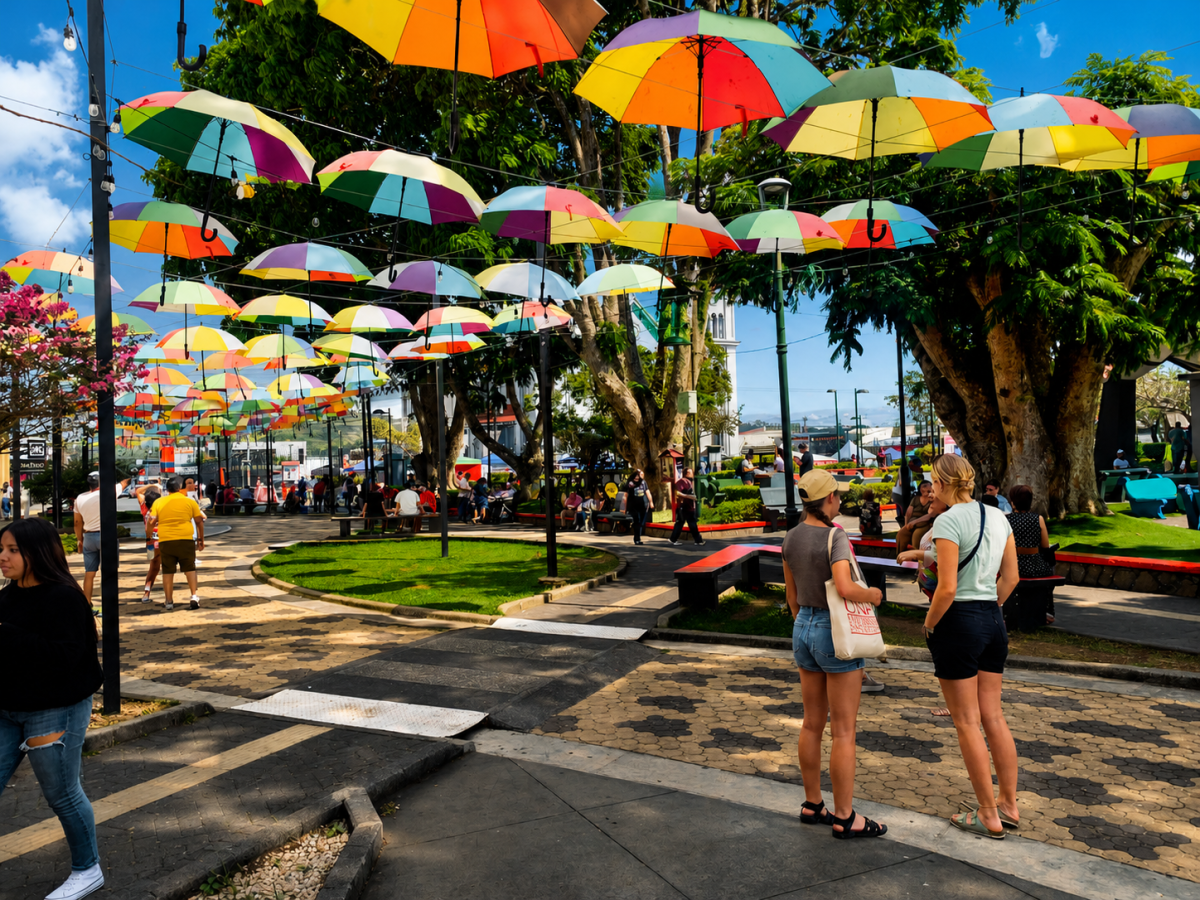
- Sarchi town, Sarchí: The Technicolor Heart of Costa Rican Craft. If Costa Rica had a signature color palette, you would find its source in Sarchí. Perched in the emerald folds of the Alajuela province, this isn’t just a town—it’s a living gallery where the rhythm of the lathe and the stroke of a paintbrush have dictated the pace of life for over a century. A Symphony of Geometry and Wood: Sarchí is famously the cradle of the hand-painted oxcart (carreta), a UNESCO-recognized masterpiece of intangible heritage. These aren't mere relics; they are "singing" history. Traditional artisans, like those at the Joaquín Chaverri Oxcart Factory (est. 1902), still craft wheels that produce a unique chime as they strike the hubnut—a sound that once identified a family's approach long before they were seen.The town’s aesthetic is so infectious that it has bled into the architecture. The central Parque Norte features a Guinness World Record-holding oxcart—a 45-foot technicolor giant—set against the backdrop of a "wedding cake" church painted in surreal hues of pink and turquoise.
- San Ramon town - The Intellectual Highland Soul: While much of Costa Rica is defined by its coastline, San Ramón is defined by its mind. Known affectionately as the “City of Poets and Presidents,” this misty highland enclave sits at the crossroads of political history and literary romance. It is a town that trades tropical heat for a crisp, spring-like climate and exchange-student energy for authentic "Tico" sophistication.San Ramón’s identity is anchored by its extraordinary pedigree; it has birthed five of the nation’s presidents and a litany of its most celebrated writers. You can feel this legacy in the Parque Central, where the towering, Gothic-style steel church stands as a sentinel over a community that prioritizes conversation and culture. The local Regional Museum isn't just a collection of artifacts—it’s a tribute to the thinkers who shaped Costa Rica’s peaceful, democratic identity.
This route has become increasingly popular because it allows drivers to avoid part of the traffic congestion near Ciudad Quesada while offering a more direct connection to the Northern Plains region. The road crosses mountain landscapes, cattle farms, and small rural communities that showcase an authentic side of Costa Rica beyond the urban areas.
Advantage of this route:
- More direct access to La Fortuna
- Less traffic compared to the traditional Ciudad Quesada route
- Ideal for private transportation services
- Beautiful countryside and panoramic mountain views
- More efficient travel times during certain hours of the day
- Better suited for larger vehicles and tourism operations
The area around Bajo Los Rodríguez has become an important connector toward northern Costa Rica, while Peñas Blancas naturally transitions travelers into the Arenal region. Important Considerations:
- Some mountain sections include sharp curves
- Fog and heavy rain may occur during the rainy season
- Defensive driving is recommended for unfamiliar drivers
- Certain sections have limited lighting at night
Despite these conditions, many travelers consider this route the perfect balance between efficiency, scenery, and comfort.
The Vara Blanca / Poas Volcano Route: Nature and Scenic Beauty
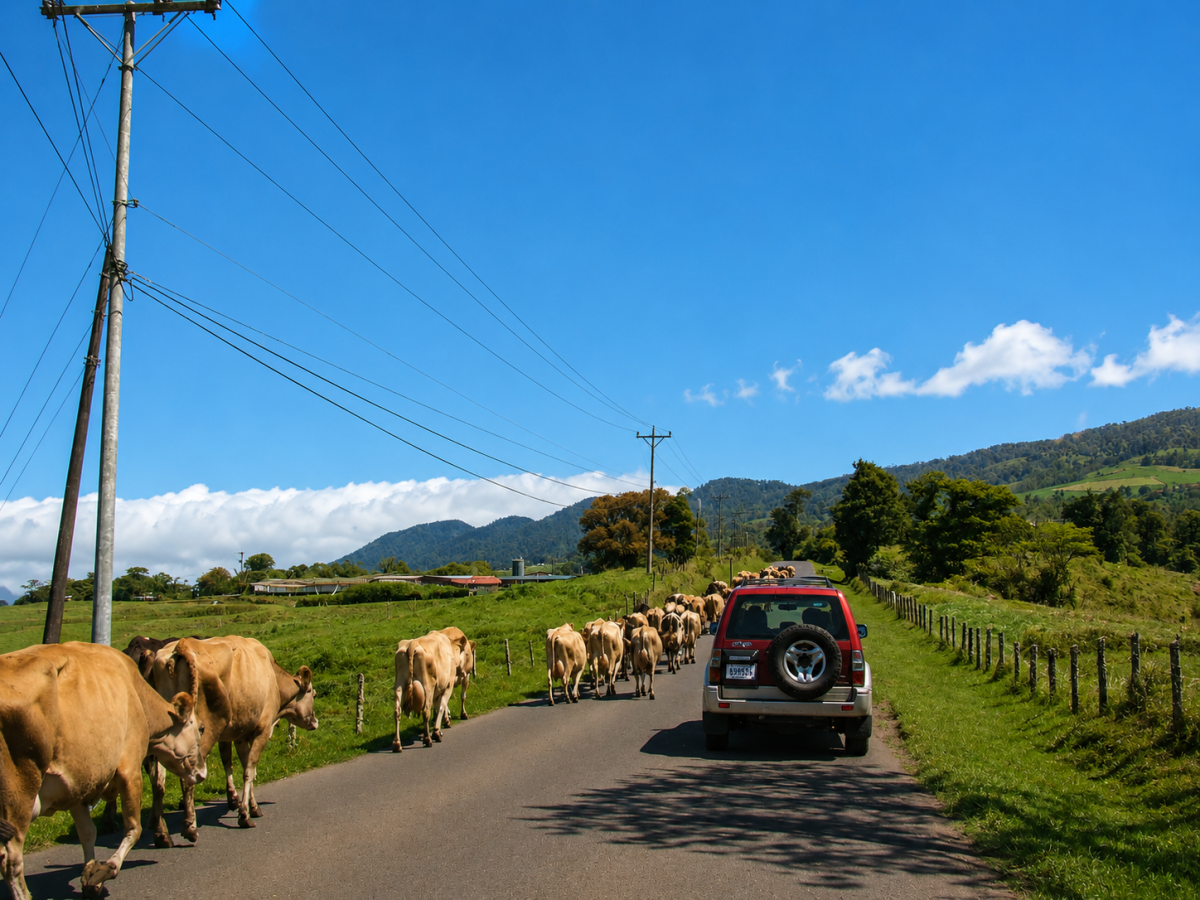
The route through Vara Blanca is perhaps the most scenic drive toward La Fortuna and is highly appreciated by travelers who want the transfer itself to become part of the adventure. The route generally follows:
Highlights of this route
- Spectacular natural scenery
- Cloud forests and fresh mountain climate
- Close proximity to La Paz Waterfall Gardens
- Incredible photography opportunities
- A more adventurous and immersive travel experience
This option is especially popular among independent travelers, photographers, and visitors who enjoy slow travel and nature-focused experiences.
Challenges of This Route
- Frequent fog conditions
- Narrower roads with sharper curves
- Weather conditions can change rapidly
- Certain areas may be vulnerable to landslides during heavy rains
- Less suitable for large buses or inexperienced mountain drivers
During the rainy season, driving conditions can become significantly more demanding.
The Bigger Picture: Tourism Infrastructure in Costa Rica. Beyond personal preference, the discussion about these routes also highlights an important reality:
La Fortuna has become one of Costa Rica’s top tourism destinations, and the growth in visitor arrivals has placed increasing pressure on the country’s road infrastructure. Every day, thousands of tourists, transportation providers, tour operators, and tourism businesses rely on these roads to connect airports, hotels, and attractions throughout the region. Routes such as San Ramón – Bajo Los Rodríguez – Peñas Blancas demonstrate how tourism growth constantly pushes the need for safer, faster, and more efficient transportation alternatives.
Improving and modernizing these roads will be essential for maintaining the competitiveness of Costa Rica’s tourism industry while improving the travel experience for both visitors and local communities.